Raking, Shoveling and Gardening: Seasonal Chores, Kindly Done
Yard work and household projects are real physical effort, and they tend to arrive all at once. Learn how to pace yourself and treat chores as movement that respects your body.
Why chores count as exercise
Raking leaves, shoveling a walkway, and pulling weeds don't feel like a workout, but they ask a lot of your body. You squat, reach, twist, carry, push, and pull, often for an hour or more. That's real physical activity, and it can be a pleasant way to stay active through the year.
The catch is that seasonal chores tend to arrive all at once. The first cold morning brings snow, or a warm weekend brings a yard full of work you've been putting off. Your body may not have done anything like it in months. That mismatch, not the chore itself, is usually what leads to a sore back or stiff shoulders.
The good news is that a few small habits can make the work gentler. You don't have to get everything done in one go, and you don't have to prove anything to the leaves.
Warming up before the work
Think of the first few minutes as a way to let your body know what's coming. Cold muscles and stiff joints tend to complain more, especially on chilly mornings.
Try a short, easy routine before you head outside:
- Walk around the house or yard for a few minutes at an easy pace.
- Roll your shoulders slowly backward and forward.
- Gently turn your torso from side to side, keeping your hips facing forward.
- Take a few slow, shallow squats, only as deep as feels comfortable.
- Open and close your hands a few times, especially if you'll be gripping tools.
Dress in layers you can remove as you warm up, and wear shoes with good grip. In cold weather, keep your hands covered, since cold fingers make it harder to hold tools comfortably.
Pacing, breaks and switching tasks
Most overdoing happens when we try to finish. It helps to decide ahead of time how long you'll work, then treat that as the goal instead of the whole job.
Many people find it easier to work in short rounds, perhaps twenty or thirty minutes, followed by a few minutes of rest. Sit down, sip some water, and look around. Pausing before you feel worn out usually works better than pausing after.
Switching tasks helps too. Repeating the same motion for a long stretch can tire the same muscles and joints. If you've been raking, which uses your arms and back, you might move on to something done at a different height or with a different posture, such as watering containers or tidying a potting bench.
A few other ways to keep the pace kind:
- Spread the job over several days instead of a single weekend.
- Work in the part of the day when the weather is easiest on you.
- Drink water, even when it's cool outside.
- Notice your breathing. If you can't talk comfortably, slow down.
- Stop when your form starts to slip, not when the job is done.
Shoveling deserves a special mention. Pushing snow in small, shallow passes is usually easier than lifting full, heavy loads. Cold air and sudden effort can be demanding on the body, so take it slowly and rest often.
Lifting and bending with care
Much of the strain from yard work comes from how we bend and lift. A few simple adjustments can spread the effort across bigger muscles and spare your lower back.
When you need to pick something up, whether it's a bag of leaves, a pot, or a shovelful of snow, try this approach:
- Stand close to the load with your feet about shoulder-width apart.
- Bend at the hips and knees, keeping your back in a natural, neutral position.
- Tighten your belly gently and hold the load close to your body.
- Lift by straightening your legs, not by yanking with your back.
- Turn by moving your feet, rather than twisting at the waist.
Smaller loads are often smarter. Fill a bag halfway, or make two trips instead of one. A wheeled cart or a tarp to drag leaves can save a lot of carrying. Tools with longer handles may let you stand taller, and a kneeling pad or low stool can make work at ground level much easier on your knees.
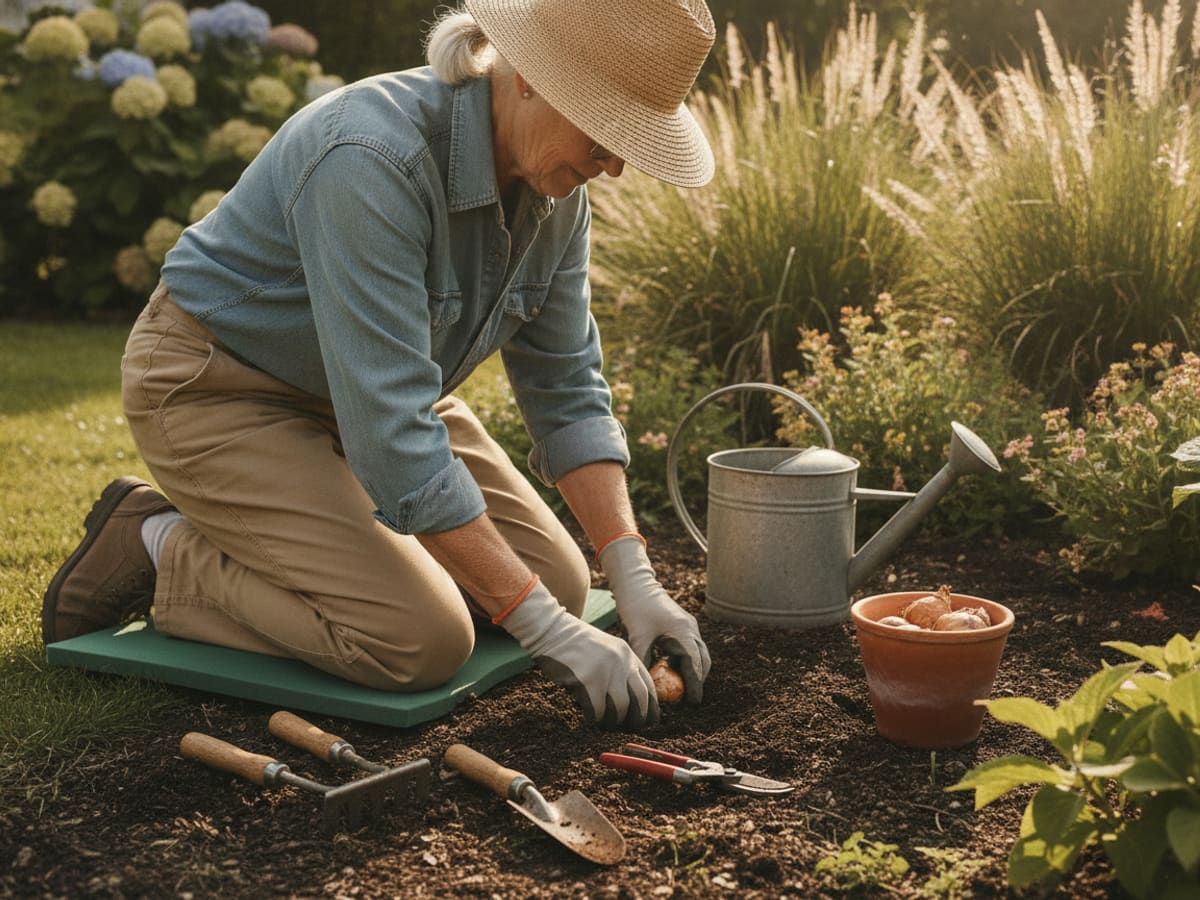
When you're weeding or planting, avoid staying bent over for long stretches. Kneel on a pad, or sit on a low stool, and change position often.
Knowing when to ask for help or check with your doctor
Asking for help is a practical choice, not a failure. A neighbor, a family member, or a local service might be glad to take on the heaviest jobs, like hauling wet snow or clearing a steep slope. You can also trade tasks with someone, so each person does the part that suits them best.
Pay attention to what your body tells you. Mild muscle tiredness after a good day outdoors is common. Sharp pain, a feeling that something is wrong, or soreness that lingers is worth taking seriously. Stop, rest, and give yourself time.
If you have a health condition, take regular medication, have had a recent surgery, or simply haven't been active in a while, it's a good idea to ask your doctor what kinds of chores are reasonable for you. They know your history and can give guidance that fits you.
Seasonal chores can be a satisfying part of the year when you approach them with patience. Warm up, pace yourself, lift thoughtfully, and let the work wait when you need a break. The yard will still be there tomorrow.


